From the pivotal Thu Thiem Bridge to vital transportation arteries like the North-South Expressway, Construction Corporation No. 1 – JSC (CC1) has transformed from a bridge builder into a strategic infrastructure investor, accompanying the country's development.
Awakening the lands
On a day at the end of 2005, exactly three decades after the reunification of Vietnam, construction of the Thu Thiem Bridge on the Saigon River officially commenced. In the memories of those who were connected to the city at that time, this event held significance far beyond a typical groundbreaking ceremony. This was because, after 1975, although the socio-economic landscape of the South had undergone many changes, the Saigon River section passing through the central area still retained the appearance of separating the two banks.
The Thu Thiem Peninsula, spanning over 737 hectares at the time, was only about 300 meters across the river from the central district, yet it remained almost entirely outside the vibrant rhythm of city life. Residents in this area relied daily on ferries for transportation. The local economy grew slowly, and people's livelihoods mainly depended on riverside factories or small-scale river-related occupations.
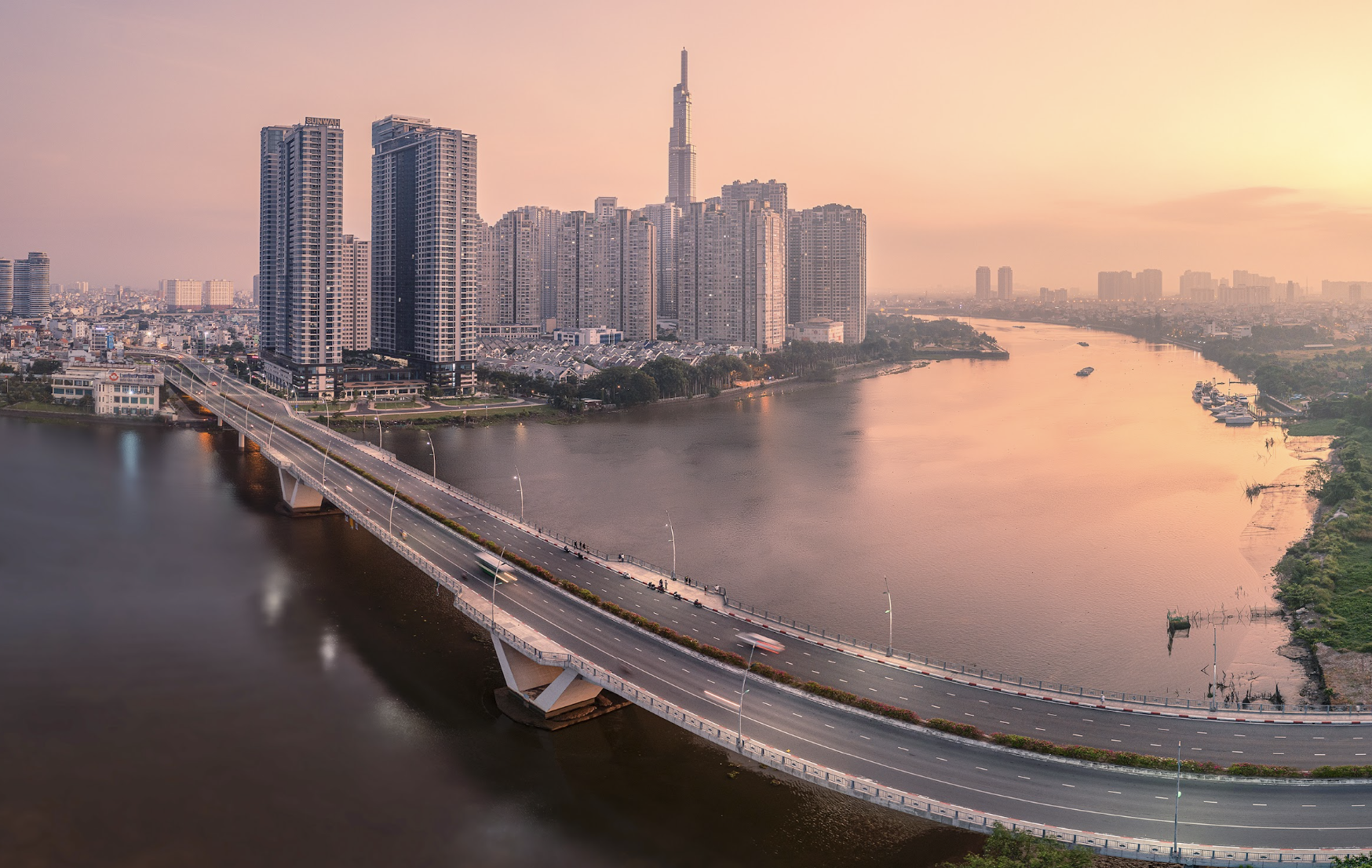
Entrusted with the responsibility of realizing the first post-war bridge over the Saigon River, the engineering and worker team of CC1 – then an enterprise under the Ministry of Construction – entered the construction site with the utmost focus and responsibility. The project had a total investment of approximately 1,100 billion VND and demanded extremely stringent technical requirements.
The project boasts a total length of 1,250m, a scale of 6 lanes with 5 spans, combined with a complex four-branch bridge system and a 460m long underpass at the Nguyen Huu Canh intersection in the former Binh Thanh district.
When the Thu Thiem Bridge was officially inaugurated and opened to traffic in 2007, a new chapter opened for the urban space in the eastern part of Ho Chi Minh City. This bridge not only relieved the heavy traffic pressure on the Saigon Bridge but truly became a catalyst for awakening a dormant area.
From a desolate peninsula covered in reeds, Thu Thiem rapidly transformed into a modern metropolis, an international-class financial and commercial center often referred to as the "Pudong" of Vietnam. This historic breakthrough also opened a new chapter for CC1, affirming the Vietnamese construction company's ability to master the techniques of constructing large-span bridges.
The bridges ahead
In fact, CC1's ability to overcome harsh technical challenges is not accidental, but has been forged persistently throughout its history since 1979. Emerging from the post-war reconstruction period when the South faced severe infrastructure and energy shortages, CC1 left its mark across the vast forests to alleviate the country's electricity hunger.
Century-old hydroelectric projects such as Tri An, Thac Mo, Ham Thuan - Da Mi, Buon Kuop, Buon Tua Srah, Dak R'Tih, Dong Nai 3, Dong Nai 4, etc., are enormous practical training grounds that have forged the will, experience in organizing large-scale construction sites, and the ability to master large-scale reinforced concrete structures for the staff and workers of the Corporation.
Building upon that solid foundation of energy infrastructure, the success of the Thu Thiem Bridge provided impetus for CC1 to continue expanding its scope, constructing a series of vital bridges across key economic regions. CC1's construction footprint is consistently evident in large-scale projects such as the new Dong Nai Bridge, Hoa An Bridge, and An Hao Bridge – crucial interchanges that have broken through traffic bottlenecks between Ho Chi Minh City and the industrial centers of Dong Nai and Binh Duong (formerly).
In the South, the company continues to register its involvement in projects such as the Ngũ Hiệp Bridge, Rạch Miễu Bridge, and Đại Ngãi 2 Bridge, contributing to connecting the vital trade routes between the Mekong Delta and major cities.
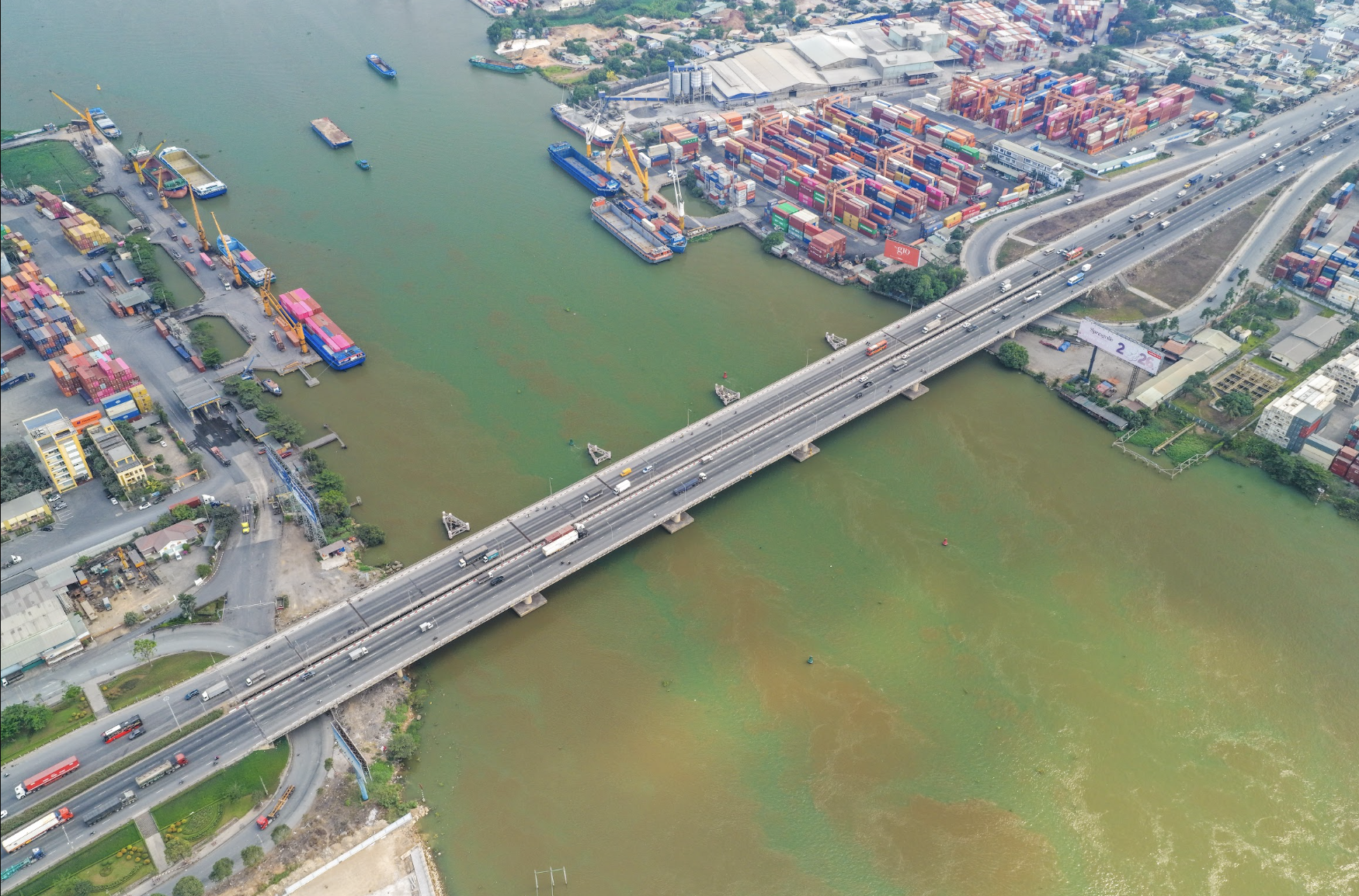
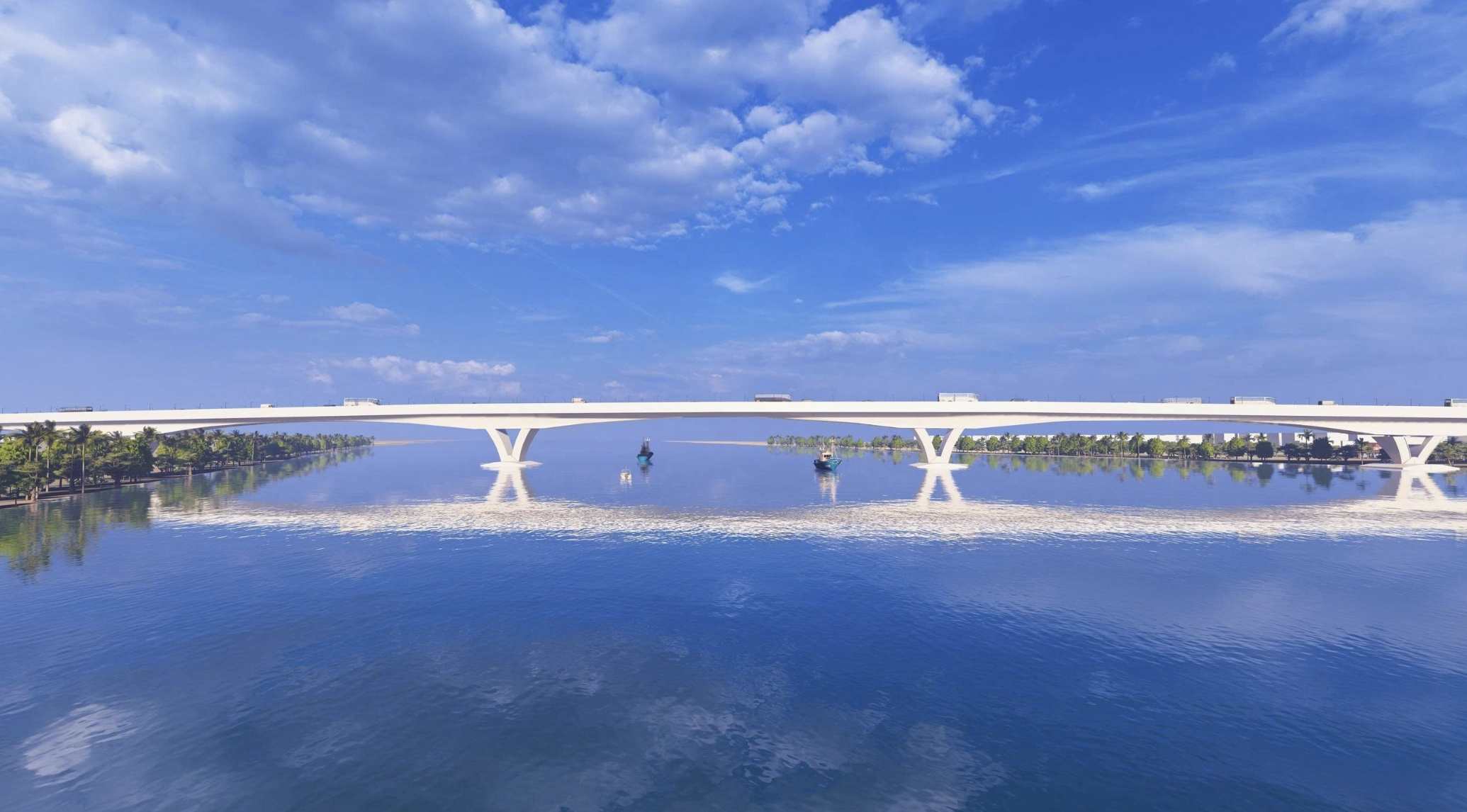
Not limited to the South, CC1's technical expertise has expanded nationwide, with the company being entrusted with important national-scale infrastructure projects in the North. Notably, CC1 is the contractor for the construction of the Me So Bridge and Hong Ha Bridge, part of the Ring Road 4 Project in the Hanoi Capital Region.
These are key infrastructure projects, characterized by complex technical scale and particularly important strategic significance in completing the inter-regional transportation network of the capital. The construction of bridges over the Red River to complete Ring Road 4 once again affirms CC1's position as an extended arm, always ready to be present at the most challenging infrastructure hotspots of the country.
Choose your own path.
However, in light of the breakthrough demands on national transportation infrastructure in the new era, CC1 understands that remaining merely a construction contractor will make it difficult for the company to create groundbreaking synergistic value. The increasing participation of domestic enterprises in large-scale projects is key to ensuring the proactive and sustainable development of the economy.
Recognizing this mission, the company has undertaken a comprehensive restructuring, gradually shifting from a traditional contractor role to a strategic infrastructure investor, ready to undertake complex public-private partnership projects requiring strong financial resources and comprehensive risk management capabilities.
The clearest evidence of this historic transformation is CC1's selection as the investor for two key projects: the Cat Lai Bridge and the Long Hung Bridge in Dong Nai City, under a public-private partnership (PPP) model, specifically a BT (build-transfer) contract. This not only marks a turning point, affirming CC1's remarkable growth in capital scale and brand reputation, but also demonstrates its ability to partner with the government throughout the entire project lifecycle, from investment preparation and capital arrangement to design, high-tech construction, and handover for operation.
September 29th marked a significant milestone when Component Project 2 – the Cat Lai Bridge Construction Project and the Long Hung Bridge Construction Project (Dong Nai 2 Bridge) – officially commenced under the public-private partnership model, realizing two of the region's most strategic infrastructure projects.
In the planning landscape of the Southern key economic region, the Cat Lai and Long Hung bridges are considered strategic links directly connecting Long Thanh International Airport with the center of Ho Chi Minh City. Investing in the construction of these two bridges will end the decades-long dependence on the Cat Lai ferry terminal, alleviate the severe congestion on the existing expressway, and thereby expand the space for urban development, logistics, industry, and inter-regional services.
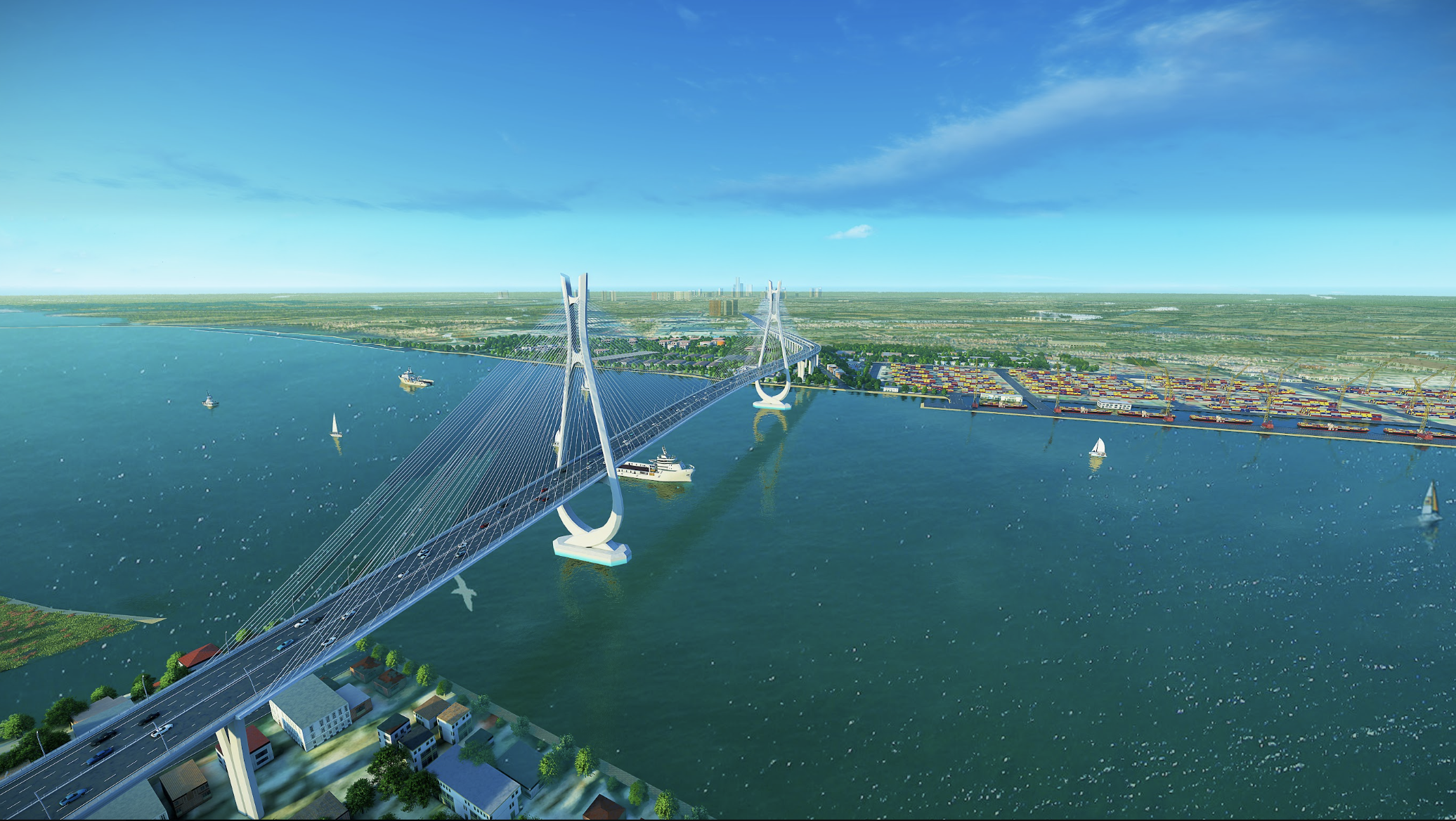
For CC1, dedicating resources to these projects is not simply a business venture seeking profit, but a social responsibility and a national mission, aiming to ensure that this mega airport project of the century maximizes its operational efficiency once it becomes operational.
Alongside expanding its investment role, CC1 has been continuously enhancing its construction capabilities through a strategy of strengthening its internal resources through external support. Collaborations with international contractors have enabled the company to access and master the most advanced technologies, improve environmental standards, and adopt professional project management models according to international standards.
From this foundation, CC1 has not only participated in iconic mega-projects such as the Ben Thanh – Suoi Tien Metro Line 1, Tan Son Nhat Terminal T3, Ho Chi Minh City Children's Hospital, and Ho Chi Minh City Television Station, but has also contributed to shaping the modern urban landscape through many typical commercial and service projects such as Rex Hotel, Majestic Hotel, Caravelle Hotel, Sheraton Hotel, Diamond Plaza, and Bitexco Financial Tower. Through various stages of development, these projects not only represent urban life but also mark CC1's involvement in creating commercial, service, and accommodation spaces in key locations.
In addition, CC1 is gradually asserting its regional expansion capabilities with projects already underway in Cambodia, creating a solid foundation to further expand its construction footprint into the Laotian market.
Over its 47 years of formation and development, CC1's journey truly reflects the resilience and growth of Vietnamese businesses in the era of integration. From the first Thu Thiem bridge across the Saigon River, awakening a desolate swampy area twenty years ago, to the major projects of Me So Bridge, Hong Ha Bridge, and especially Cat Lai Bridge and Long Hung Bridge, paving the way for the future of international aviation today, CC1 continues to persistently extend its development journey, building bridges connecting the nation's strong present with a prosperous and enduring future.
Source: Construction Newspaper