Faced with a shortage of manpower in the construction industry, Construction Corporation No. 1 – JSC (CC1) is stepping up the training of practical engineers, proactively securing a high-quality workforce for key infrastructure projects.
The Vietnamese construction market is entering a period of strong growth, leading to a rapid increase in demand for high-quality technical personnel, while the pace of training and supplying personnel from the education system cannot keep up. Facing a severe shortage of personnel in key positions, Construction Corporation No. 1 – JSC (CC1) has chosen a long-term strategic approach: proactively sourcing its own workforce, focusing on practical training, developing human resources for the entire project chain, and ensuring long-term job stability to sustainably retain talent.
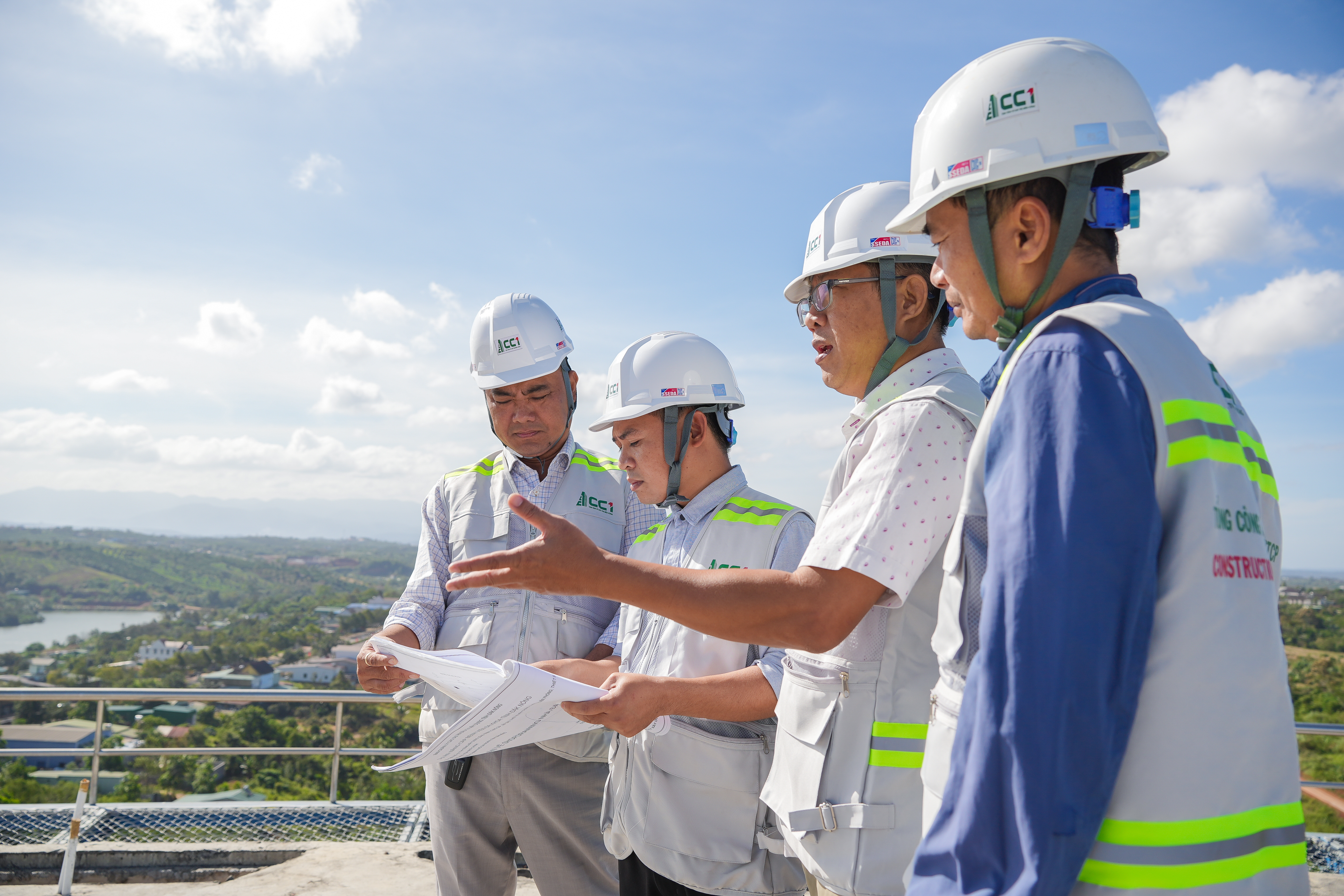
Proactively train and develop capabilities through practical experience on construction projects.
For large-scale and highly complex infrastructure projects, the manpower challenge never begins when the construction site enters its peak phase, but must be addressed well in advance.
According to Mr. Le Bao Anh, General Director of CC1, businesses cannot passively wait for projects to be approved and implemented before searching for suitable personnel in the market. The entire workforce of engineers and technicians must be prepared early, given sufficient time to accumulate specialized knowledge, practical experience, and develop multi-stakeholder coordination skills to meet the stringent requirements of the construction site.
“Machinery and equipment can be purchased, modern technology can be transferred, and technical standards can be learned, but a truly capable and resourceful team of personnel to implement complex projects cannot be formed overnight. Especially in new fields requiring a very high level of technical expertise, the competitiveness of a major general contractor lies not only in its ability to organize construction, but also in its mastery of technology, construction organization methods, overall project management, and the ability to integrate various stages according to the advanced EPC general contractor model,” Mr. Le Bao Anh emphasized.
Based on that strategic direction, human resource training at CC1 is not simply a supplementary activity to the recruitment process, but has become a crucial component in the strategy of preparing the capacity to anticipate mega-projects. The transition from the classroom or office space to the actual construction site is a highly practical journey, imbued with a spirit of experience, exploration, and growth through each project, perfectly suited to intensive internship programs at key transportation projects, modern industrial facilities, and large-scale urban infrastructure systems.
A clear example of this orientation is CC1's continuous efforts over the years to strengthen cooperation with major universities to train and develop high-quality human resources, especially in strategic infrastructure, construction, and transportation fields. A prime example is the comprehensive strategic cooperation worth $1 million over 5 years between CC1 and the University of Technology (Vietnam National University Ho Chi Minh City). This cooperation allows CC1 engineers to access in-depth knowledge from leading experts both domestically and internationally, and to participate in internships and practical training at key projects.
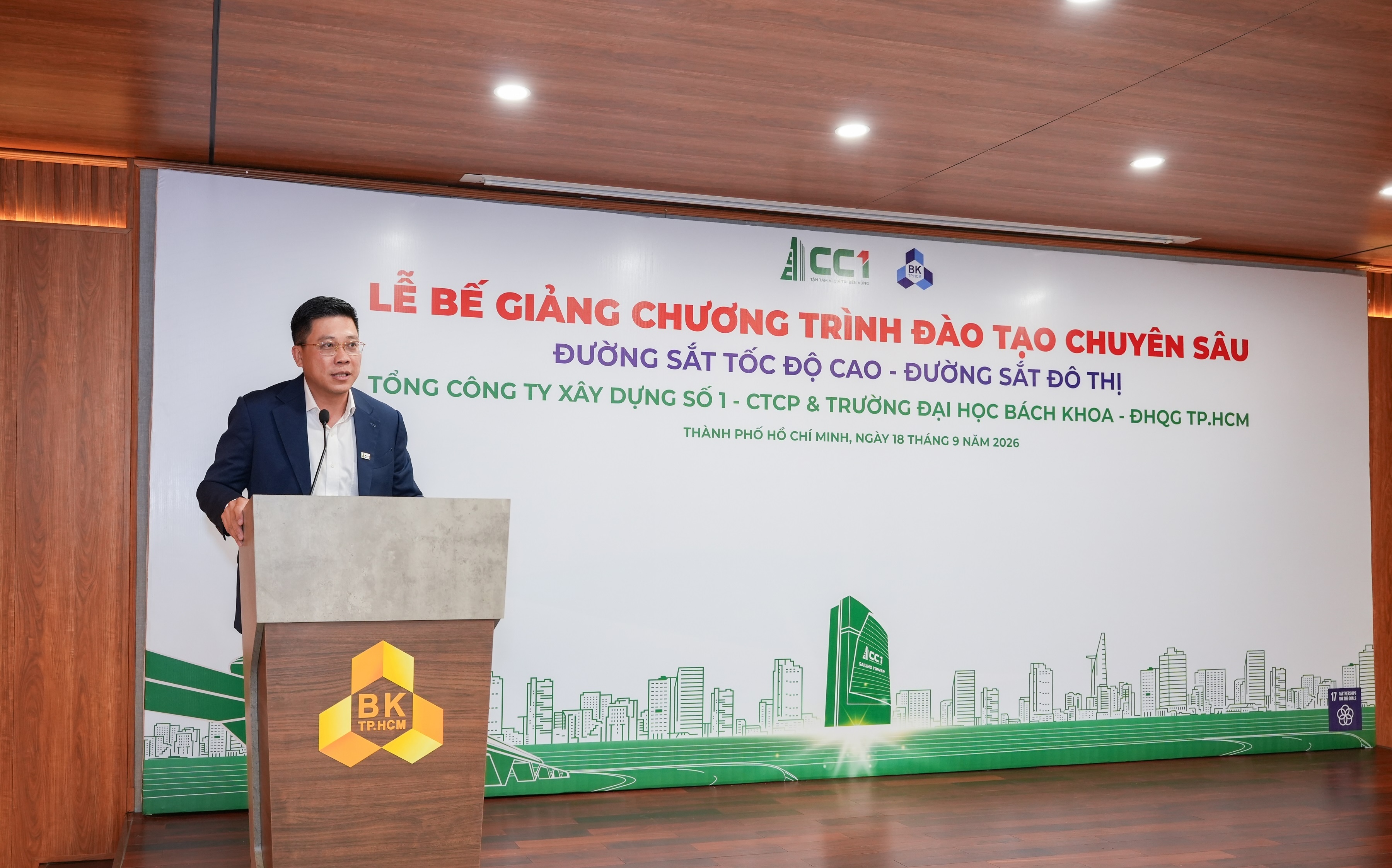
In particular, to realize its strategy of building a foundation on practical experience, CC1 has officially launched a 3-month intensive practical training program at key national projects for outstanding trainee engineers who have graduated from the Professional Training Center.
On-site experience is the clearest measure of CC1's human resource development strategy. Academic knowledge, when honed through fieldwork, helps engineers quickly improve their professional skills and hone their practical abilities. Bringing knowledge to the construction site is linked to the goal of improving construction quality in each project; so that after each project is completed, practical experience continues to be accumulated, creating a foundation for training the next generation of personnel ready to undertake larger-scale national projects.
This entire systematic preparation process is designed to meet the demand for high-quality human resources for a large portfolio of projects that CC1 is currently undertaking and will continue to implement, including key transportation projects such as: the Ring Road 4 project – Hanoi Capital Region, the Bao Loc – Lien Khuong expressway, major bridge projects such as the Cat Lai Bridge and Long Hung Bridge, as well as strategic road and thermal/hydroelectric power plant projects in the near future.
Solving the human resources problem with a long-term strategy.
In reality, the current labor market pressures in the construction industry are not simply random fluctuations, but the inevitable result of a labor market imbalance between supply and demand.
According to Ms. Phan Thi Phuong Dung, Director of Human Resources Management & Support at CC1, when a series of key national infrastructure, industrial, and energy projects are launched almost simultaneously, the demand for human resources increases exponentially, while the supply only increases linearly at the training rate of the vocational education system.
At CC1, this pressure is clearly reflected in the significantly longer average time required to successfully recruit for specialized technical positions compared to previous periods. Currently, the Corporation directly manages, mobilizes, and coordinates a massive workforce of over 10,000 people, including management staff, field engineers, and construction workers distributed across offices and construction sites nationwide.
Thanks to early human resource planning – internal training, long-term welfare policies, and personnel coordination plans across the project portfolio – CC1 has proactively prepared resources to meet the requirements of each project, including many key transportation infrastructure and industrial-energy projects in which CC1 participates as the main contractor or a member of a consortium.
In the long term, with the value of its backlog consistently maintaining an impressive level of over VND 50 trillion, CC1 possesses a competitive advantage in ensuring a continuous and stable flow of work for its employees over many years. This continuity of work and income is the most practical and valuable commitment to retaining each site engineer, allowing them to confidently commit to the company long-term without worrying about income interruptions between projects.
CC1 also firmly maintains its stance of refusing to participate in short-term, aggressive salary increases to attract personnel, because the company understands that if personnel costs skyrocket without corresponding growth in labor productivity, the contractor's profit margin will be severely eroded. Instead, CC1's core solution is to focus maximally on three strategic pillars: self-training of internal human resources to gradually reduce dependence on the external recruitment market; accelerating the comprehensive digital transformation process on all fronts, from digital construction sites and offices to digital project management systems, to significantly improve labor productivity per person; and accurately calculating and forecasting labor costs right from the initial bidding process.
Thanks to this scientific approach, personnel costs at CC1 are not seen as an expense to be cut, but rather as a strategic investment that needs to be properly managed to generate significantly greater surplus value.
However, despite CC1's strong internal capabilities, the company frankly acknowledges that the labor shortage in the construction industry cannot be solved solely by the efforts of any single enterprise. Based on practical experience gained from numerous large-scale projects, CC1 representatives boldly contributed their insights directly to a high-level meeting with the Deputy Prime Minister, proposing several macro-level solutions to address the bottlenecks facing the construction industry.
Key recommendations include: rapidly establishing a national database on construction labor and labor costs; setting up a mechanism for quickly updating labor costs when the market experiences significant fluctuations; researching and implementing a mechanism for sharing labor risks for long-term contracts and key projects; implementing a program for ordering construction workforce training based on actual needs; perfecting the legal framework for labor outsourcing and construction teams; and considering the application of some quota mechanisms for importing unskilled labor for certain specific state-funded projects, as well as mechanisms to support and streamline procedures for granting permits to foreign workers in certain technical professions that are currently in short supply, as a temporary solution alongside the aforementioned long-term training solutions.
By placing people at the center of all development plans, proactively seizing opportunities and creating resources instead of passively waiting, CC1 not only carves out a unique and solid path for itself in a volatile market but also strongly affirms its role and reputation as a leading general contractor, ready to undertake and successfully execute historically significant infrastructure projects of the country in the new era.
Source: Industry and Trade Newspaper