Faced with the negative impacts of having to exploit large reserves for embankment construction, affecting the ecosystem and posing risks of climate change, CC1 proactively developed a solution for constructing elevated bridges to enhance the capacity to protect the delta and the livelihoods of tens of millions of people.
The state acts as a support system, fostering linkages between businesses.
On September 8th, the Ministry of Construction organized the "Conference to implement Resolution No. 57-NQ/TW of the Politburo, Resolution No. 71/NQ-CP of the Government, and to promote science and technology activities, innovation, and digital transformation in the construction and transportation sectors."
The conference aims to implement Resolution No. 57-NQ/TW dated December 22, 2024, of the Politburo on breakthroughs in the development of science, technology, innovation, and national digital transformation, and Resolution No. 71/NQ-CP dated April 1, 2025, of the Government promulgating the Action Program to implement Resolution No. 57-NQ/TW of the Politburo.
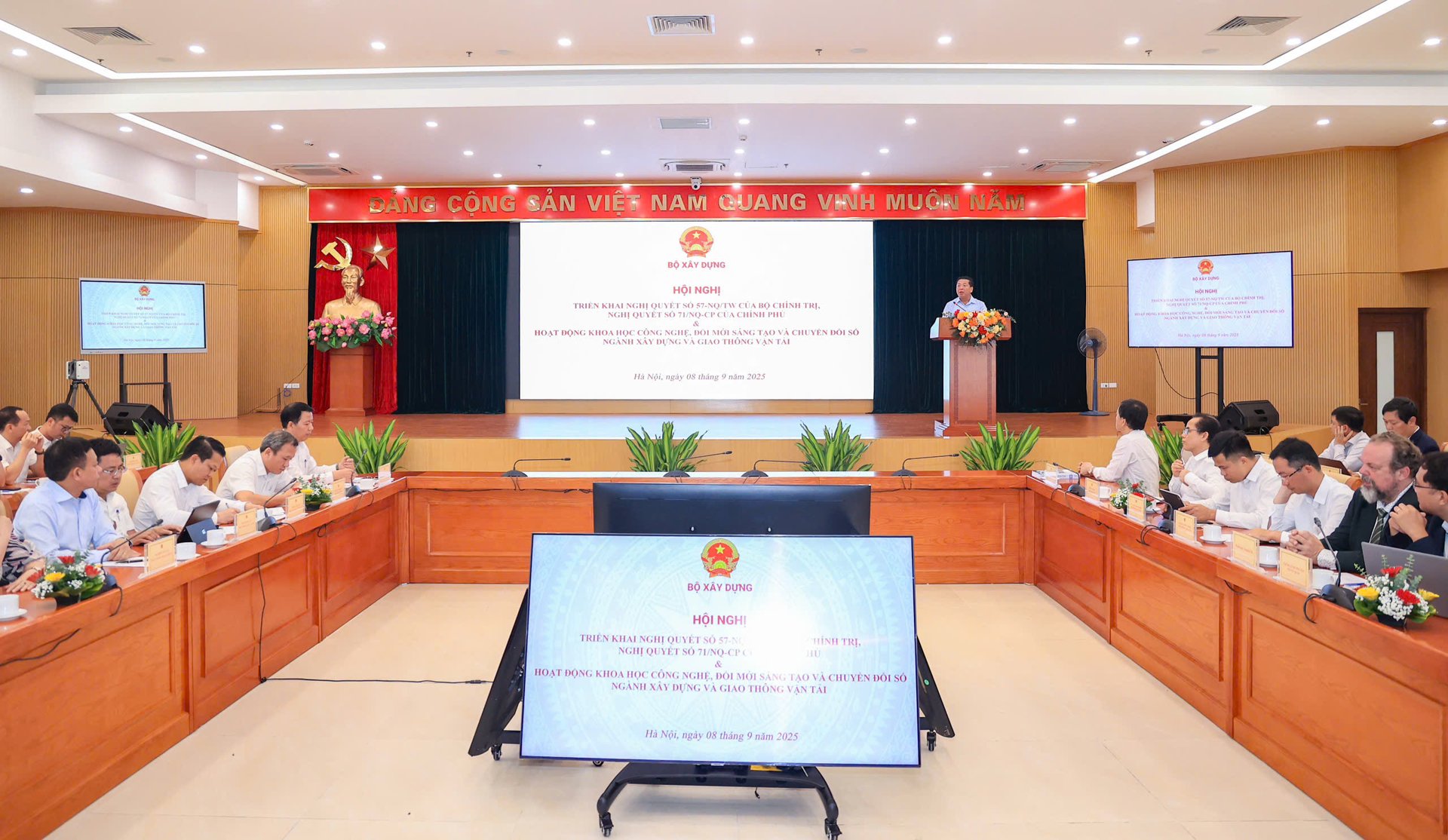
At the conference, the contributions and presentations by representatives of Construction Corporation No. 1 (CC1) were acknowledged and highly appreciated by Minister of Construction Tran Hong Minh.
Accordingly, in response to the presentation "CC1's Strategy in Applying Science and Technology, Innovation & Digital Transformation to Enhance Competitiveness and Aim for Sustainable Development of the Construction Industry" by Mr. Phan Huu Duy Quoc - Chairman of the Board of Directors of CC1, Minister Tran Hong Minh emphasized that the five proposals put forward by CC1 are valid recommendations, consistent with the sustainable development orientation of the industry.
Accordingly, the Chairman of the Board of Directors of CC1 put forward several important proposals to promote innovation and digital transformation in the construction industry. Specifically, there is a need for policies to encourage the application of new technologies in public investment projects, while sharing risks with contractors to create a vibrant and competitive market.
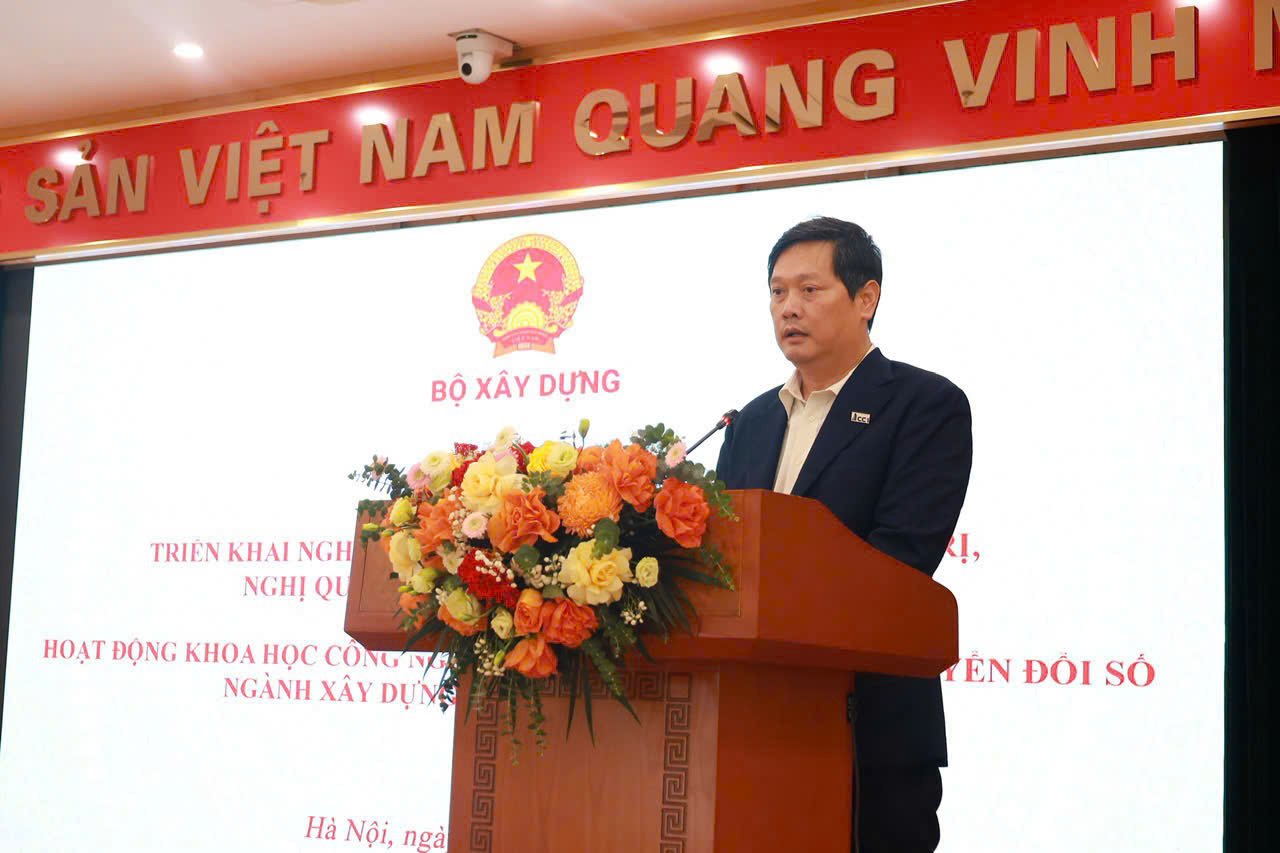
Simultaneously, it is necessary to develop new standards that are consistent with modern technology and market demands, avoiding the situation where standards become a barrier hindering innovation.
Mr. Phan Huu Duy Quoc also emphasized the importance of encouraging linkages between large construction companies and technology-owning businesses, with the support of state management agencies, for mutual development. In addition, training and education on digital transformation are considered key factors in promoting new thinking throughout the industry.
Finally, the Chairman of the Board of Directors of CC1 proposed improving the contractor selection mechanism by combining both technical and bidding factors, and allowing the application of alternative solutions in public investment projects, contributing to improving the efficiency and quality of construction.
The choice of viaducts aims to minimize environmental impact.
Mr. Phan Huu Duy Quoc stated that, in order to realize the goal of applying science and technology, innovation, and digital transformation, CC1 focuses on rationally allocating human resources and costs for research and development activities; while clearly defining the goals and criteria for sustainable development and enhancing competitiveness.
“We proactively cooperate with domestic and foreign businesses with technological potential (South Korea, Japan, China, etc.), seeking opportunities to apply new technologies, advanced technologies, and digital tools to practical projects. In addition, CC1 also closely coordinates with state management agencies to expand the scope of application, gradually enhancing its position and aiming for sustainable development of the construction industry,” Mr. Phan Huu Duy Quoc emphasized.
Mr. Quoc stated that elevated bridges are an inevitable choice if the delta and the livelihoods of tens of millions of people are to be protected. In reality, traditional highways built on embankments are facing three major bottlenecks in the Mekong Delta: a shortage of materials, negative impacts on the ecosystem, and risks from climate change.
CC1 is leading a Viaduct Solutions Research Group comprising 10 domestic and international companies. The solutions proposed will be highly flexible and tailored to the specific conditions of each region, adapting to all types of terrain and geology.
This initiative not only creates practical value for transportation infrastructure projects but also demonstrates a commitment to the sustainable development of the country. At the same time, it has become a great source of inspiration for the business community in the construction industry, fostering cooperation and innovation.
At the conference, after listening to the exchange of ideas and discussions on solutions to promote science and technology, innovation, and digital transformation in the construction and transportation sectors, Minister Tran Hong Minh emphasized that this is an important starting point, creating further momentum for science and technology activities, innovation, and digital transformation to make a strong breakthrough, contributing to improving productivity, quality, efficiency, and sustainable development of the country.
While commending the research and technology application efforts of businesses, research institutes, universities, and specialized organizations, the Minister also noted the need to overcome limitations, the most important of which is ensuring that research projects are of high quality, effective, and applicable. He emphasized the need to strengthen the linkage between the "State - researchers - businesses" to increase the commercial viability of research results.
Source: Dan Viet Newspaper