The People's Committee of Dong Nai province has approved the winning architectural design for the Long Hung Bridge (Dong Nai 2 Bridge) project connecting Ho Chi Minh City, undertaken by the Bridge and Tunnel Design Consulting Joint Stock Company (BRITEC). Recently, the project officially broke ground, with the consortium of Construction Corporation No. 1 – JSC (CC1), CC1 Investment Joint Stock Company, and Southern Infrastructure and Energy Joint Stock Company as the investors.
According to the winning architectural design, the Long Hung Bridge is situated across the Dong Nai River in an area with a wide body of water and relatively low and flat terrain on both banks. In this context, a cable-stayed bridge design with soaring towers was chosen to create a distinct spatial focal point, allowing for the structure to be easily identified from a distance and overcoming the monotony of the natural landscape.
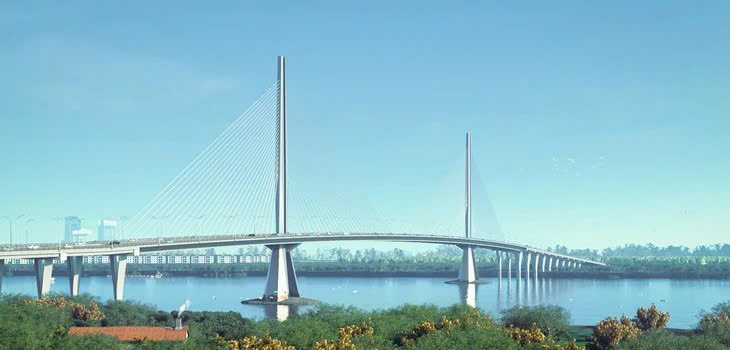
The design team believed that the architecture of the Long Hung Bridge needed to ensure overall harmony while reflecting a pioneering and leading spirit, commensurate with its role as a strategic transportation axis connecting two key economic regions. Based on this, the "Sword-shaped" tower design was chosen as the optimal solution.
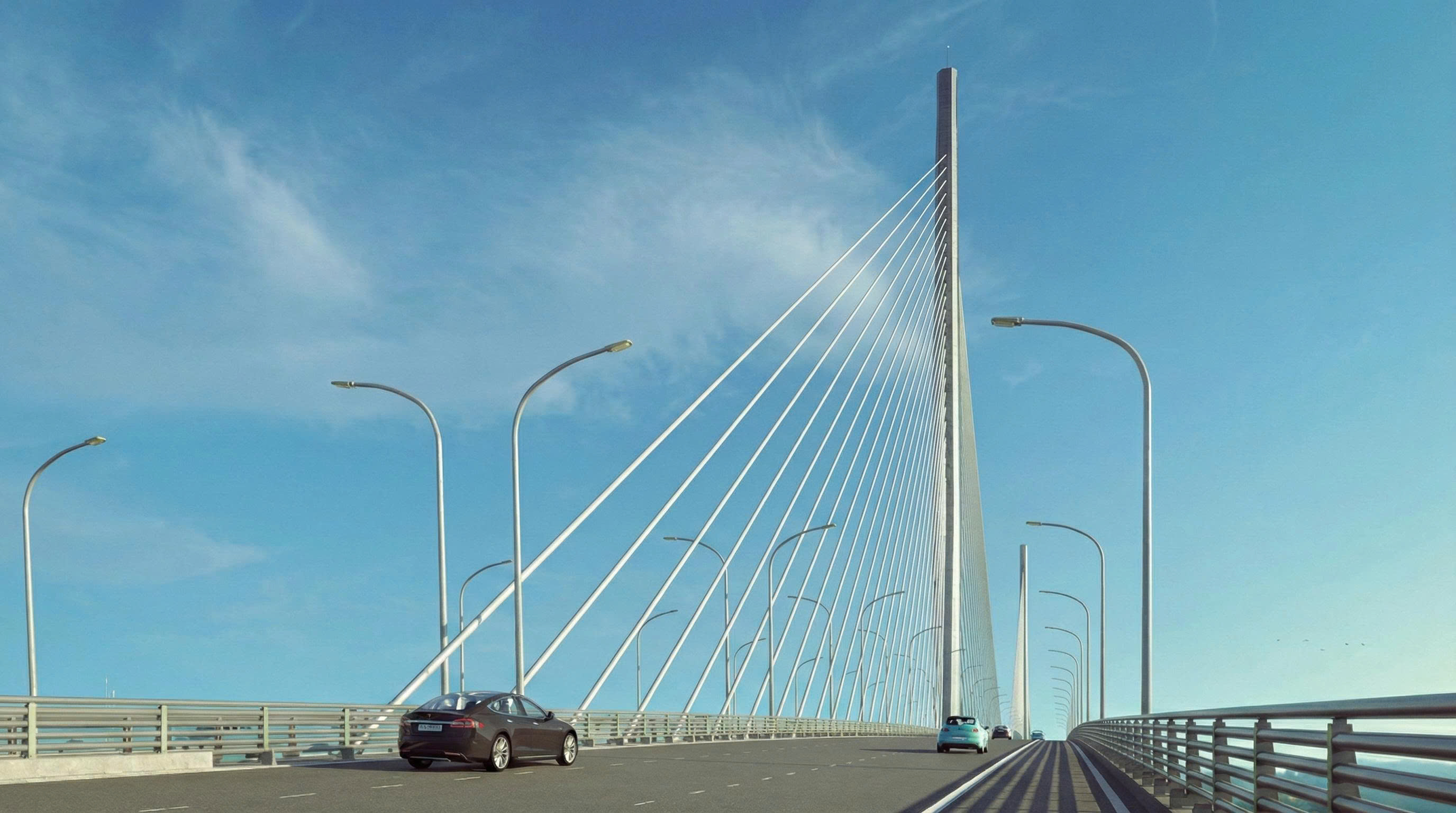

The bridge's sharp, soaring towers create a powerful visual impact, representing decisiveness and strength—qualities essential for a future industrial and logistics development area. The overall design concept is inspired by the image of the "Sword of Peace": two majestic swords planted in the river, both safeguarding peace and serving as landmarks paving the way for the continuous flow of economic activity between the two developing hubs.
The project, approximately 12 km long, is being built to urban arterial road standards, with 8 lanes and a design speed of 80 km/h. The main bridge is 2.4 km long; the approach road on the Ho Chi Minh City side is 3.8 km long; and the approach road on the Dong Nai side is 5.5 km long. The project connects Ring Road 2, Ring Road 3, Hanoi Highway, and Huong Lo 2, forming a continuous transportation axis between Tan Son Nhat Airport and Long Thanh Airport.
Regarding the route, the project's starting point connects to Ho Chi Minh City's Ring Road 3 at the Go Cong intersection (Long Phuoc ward, Ho Chi Minh City); the end point intersects National Highway 51 in An Phuoc commune (Dong Nai province), connecting to Provincial Road 770B. The project is being implemented under a public-private partnership (PPP) model with a total investment of nearly 11,500 billion VND, playing a key infrastructure role in regional connectivity in the Southeast region. The project is expected to be completed in 2028, significantly reducing travel time between Ho Chi Minh City and Dong Nai.

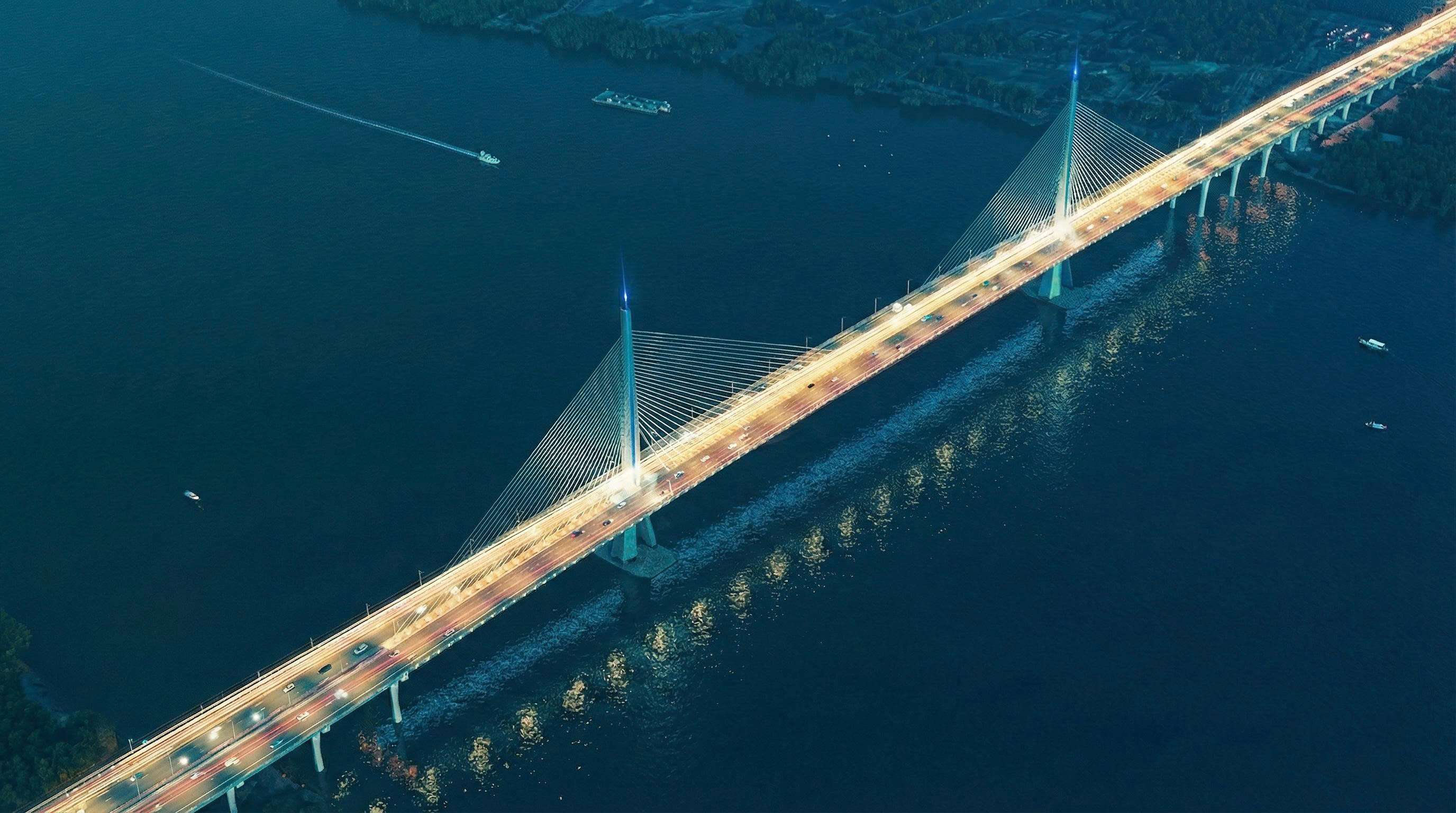
Upon completion, the Long Hung Bridge will contribute to improving connectivity between urban areas, industrial zones, logistics centers, and important transportation hubs, thereby improving the quality of life for residents and enhancing the competitiveness of the Southern key economic region.
With experience in implementing numerous large-scale bridge projects such as the new Dong Nai Bridge, Hoa An Bridge, Van Uc Bridge, An Hao Bridge, Thu Thiem 1 Bridge, Rach Mieu 2 Bridge, etc., along with a financial foundation and management capacity accumulated through many key national projects, CC1 is making a significant contribution to the formation of strategic connecting projects, meeting the requirements for the synchronous development of transportation infrastructure in the Southeast region, as well as creating long-term transportation projects that serve the common good of the community.