Recently, the People's Committee of Dong Nai province approved the results of the architectural design competition for the Cat Lai bridge project under the public-private partnership (PPP) method. Inspired by the Dong Nai River and the vitality of the fertile industrial and agricultural region, the Cat Lai bridge is designed with the idea of "reaching new heights," opening up a strategic connection axis between Dong Nai and Ho Chi Minh City.
According to this plan, the Cat Lai Bridge is designed as a cable-stayed bridge with two main tower pillars as the focal point. The main idea reflects the harmony between Dong Nai and Ho Chi Minh City, highlighting the pioneering spirit and aspiration for further development of the entire Southern key economic region.
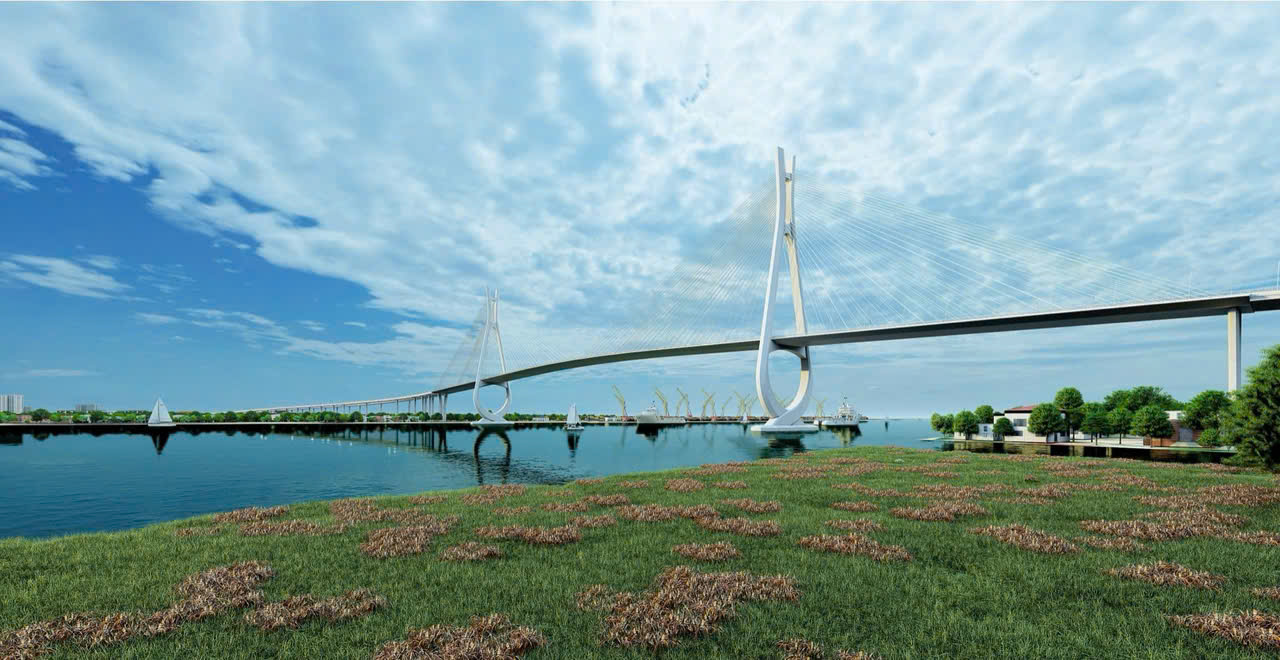
The architectural highlight lies in the two towers, which combine strong, decisive geometric shapes with soft, natural lines, creating a modern structure that still retains the rich cultural identity of the provinces and cities in the project area. Within the overall connection between Long Thanh Airport and Ho Chi Minh City, the T1 – National Highway 51 – Provincial Road 25C axis and the Cat Lai Bridge are identified as crucial transportation routes. This route helps alleviate pressure on the Ho Chi Minh City – Long Thanh – Dau Giay Expressway, while simultaneously enhancing inter-regional connectivity and meeting development requirements in the new phase.
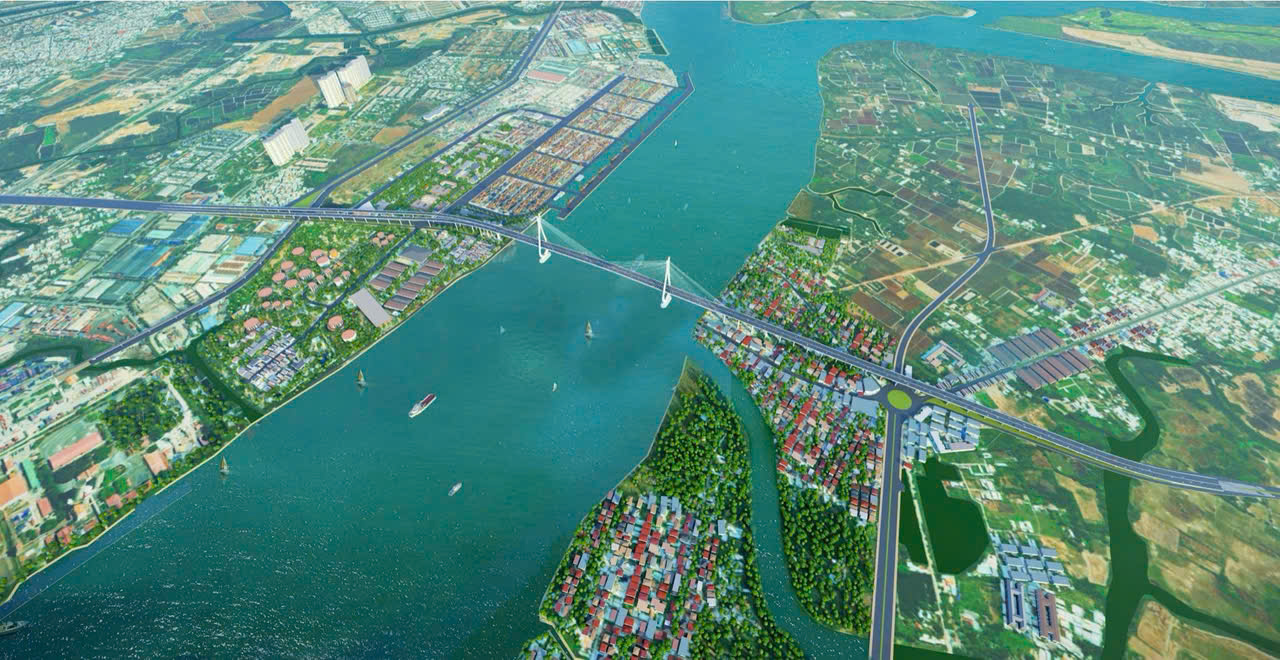
The project is located at the intersection of major transportation routes, playing a key role in directly connecting the Cat Lai area, a key logistics gateway of Ho Chi Minh City, with Nhon Trach and other dynamically developing areas of Dong Nai.
Previously, on December 10, 2025, the Dong Nai Provincial People's Council approved the investment plan for the construction of the Cat Lai Bridge project under the Public-Private Partnership (PPP) method. Following this, the Dong Nai Provincial People's Committee approved the selection of a consortium of investors led by Construction Corporation No. 1 – JSC (CC1) as the investor to implement the project in special circumstances, according to Decision No. 68/QD-UBND dated January 10, 2026. The groundbreaking ceremony for the Cat Lai Bridge took place on January 15th of this year.
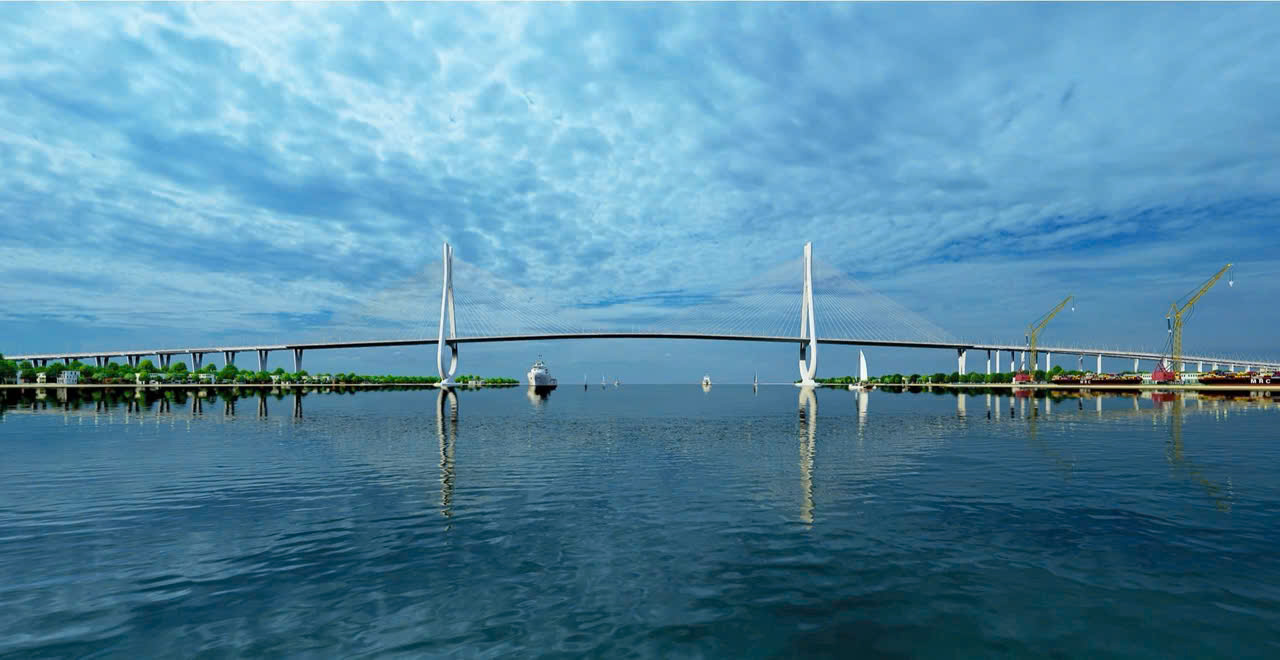
The Cat Lai Bridge is being built in Dai Phuoc commune (Dong Nai province) and Cat Lai ward (Ho Chi Minh City), creating a direct connection between the two banks of the Dong Nai River. The project has a total length of over 11.6 km, designed to modern standards, with 6 lanes for motorized vehicles and 2 lanes for non-motorized vehicles. The structure utilizes permanent steel, reinforced concrete, and prestressed reinforced concrete construction.
The main bridge is a cable-stayed bridge with two planes of cables, a main span of 450 meters, fully meeting the requirements for navigation, ensuring safety for ships entering and leaving ports and wharves on the Dong Nai River, and providing stable and long-term operation.
Along with the bridge itself, the project also includes investment in access roads and interchanges to ensure seamless integration with the existing transportation network, guaranteeing traffic safety, drainage, and efficient operation. The Cat Lai Bridge project has a total investment of approximately 20,614 billion VND, with implementation starting in 2026 and expected to be completed and put into operation in 2029.
Continuing its impact on key transportation projects across the Dong Nai River, CC1 continues to play various roles in the regional infrastructure development chain. As a BOT (Build-Operate-Transfer) investor, CC1 participated in the implementation of the Dong Nai Bridge and An Hao Bridge projects, contributing to improved transportation connectivity between Ho Chi Minh City and the provinces of the Southeast region, gradually reducing the burden on the existing infrastructure system.

Simultaneously, leveraging its strengths as an experienced construction contractor, CC1 participated in the construction of the Hoa An Bridge – a project playing a crucial role in connecting urban and industrial areas of Dong Nai province. The river crossing projects that CC1 participates in all demand high standards in construction techniques, project organization, and multi-stakeholder coordination, especially under complex construction conditions and high traffic volume.
Building on its accumulated experience as a construction contractor, CC1 has gradually expanded into infrastructure investment. The formation of a joint venture with its member companies and its selection to implement the Cat Lai Bridge and Long Hung Bridge projects not only reflects the company's overall capabilities but also marks a clear shift in CC1's deeper involvement in the large-scale transportation infrastructure development value chain.